


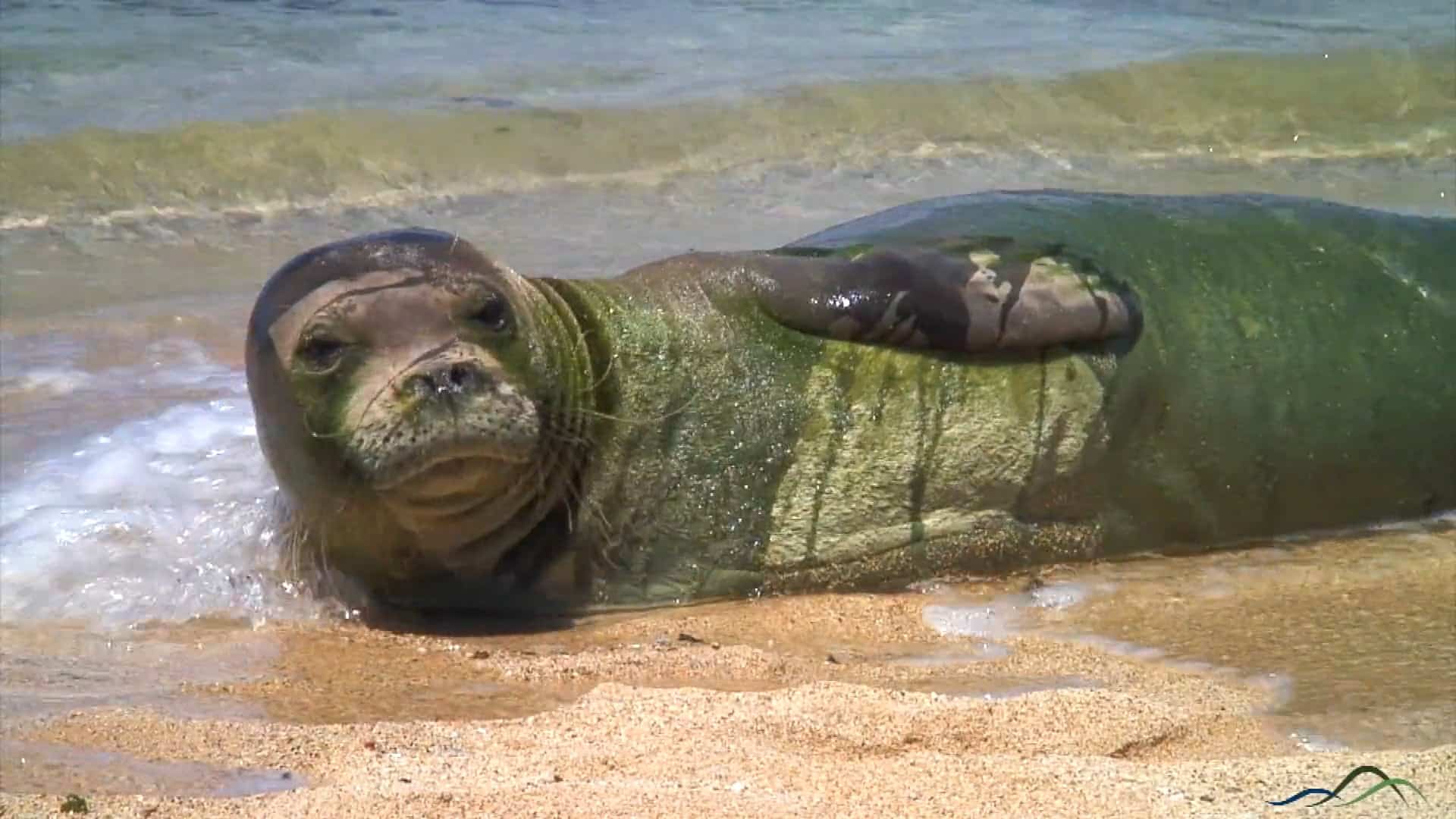
A natural wonder often seen on Kauai beaches in the Poipu Resort area, the Hawaiian monk seal is one of the most endangered marine mammals on Earth. Some guests at Parrish Kauai’s vacation rentals get to know this fascinating animal firsthand, and a few end up volunteering with the local monk seal programs during their stay. Here is more information on the Hawaiian monk seal and where you can find them when visiting Kauai.
What Is a Hawaiian Monk Seal?
The Hawaiian monk seal is one of only two mammals endemic to Hawaii, the other being the Hawaiian hoary bat. It is also the official state mammal. Hawaiians call it ilio holo i ka uaua, meaning “the dog that runs in rough water.”
Biologists often describe the Hawaiian monk seal as a living fossil because it has remained relatively unchanged for millions of years. Adults appear dark grey to brown on top and lighter underneath, weigh upwards of 600 pounds, and measure six to eight feet in length. Females are usually slightly larger than males. Their lifespan is roughly 25 to 30 years.
What is Hawaiian Monk Seal Behavior Like?
Monk seals spend most of their lives hunting, and they come onto land to rest, molt, give birth, and nurse. Resting on the sand is not a sign that something is wrong; it is what a healthy seal does after a long night of foraging.
They feed on eels, lobsters, octopus, and small reef and bottom fish, often diving to depths of 245 to 300 feet. Dives average about eight minutes, though seals have been recorded staying down for twenty. A seal sprawled out asleep above the waterline has usually earned it.
Where Can You See Hawaiian Monk Seals in Kauai?
The most common place to spot Hawaiian monk seals on Kauai is around Poipu Beach. Poipu is a nice place for the seals to rest. Additionally, the beach offers what mothers look for in a birthing site: gently sloping sand with shallow water alongside that shelters pups from sharks. There have been several births on the shores of Poipu Beach in recent years.
How Many Hawaiian Monk Seals Are Left?
The Hawaiian monk seal is an endangered species. Around 1,600 remain in the world, and every one of them lives in the Hawaiian archipelago. About three-quarters live in the remote Northwestern Hawaiian Islands within Papahanaumokuakea Marine National Monument. The remaining 400 or so live in the main Hawaiian Islands.
Kauai and Niihau host one of the largest concentrations in the main islands, which is why sightings here are more common than on most of the other islands. After decades of decline, the population has been climbing at roughly two percent a year since 2013. That recovery is fragile, and it depends heavily on how people behave on the beach.
How Close Can You Get to a Hawaiian Monk Seal?
NOAA asks visitors to stay at least 50 feet away from a resting monk seal, on land and in the water, and at least 150 feet from a mother with a pup. If volunteers have roped off a perimeter or posted signs, stay outside it no matter how far away that puts you.
A simple field check is the rule of thumb. Extend your arm, make a thumbs up, and close one eye. If your thumb covers the seal completely, you are far enough back.
There are some other guidelines to keep in mind when observing Hawaiian monk seals:
- Never pass between a seal and the ocean
- Never attempt to push a seal back into the water
- Never approach or feed one
- Keep your voice down
- Avoid flash photography
Remember that these are wild animals weighing several hundred pounds. An agitated seal, and especially a protective mother, can bite and cause serious injury. Harassing or disturbing a monk seal violates both state and federal law, and the penalties are substantial.
When Is Pupping Season on Kauai?
Gestation runs about eleven months, and while births can happen any time of year, the busiest stretch runs March through August. Mothers nurse their pups on the beach for five to seven weeks, staying with them the entire time and forgoing hunting and feeding altogether. Newborn pups wear black fur that they lose around weaning.
This is the most sensitive period of the whole cycle. A mother who feels cornered may abandon her pup, so the recommended 150-foot distance is a must.
How Can You Help Protect Hawaiian Monk Seals?
Report what you see. The 24-hour NOAA Marine Wildlife Hotline is 888-256-9840, and the operators want to hear about every sighting, not only emergencies. Call it if a seal looks sick, injured, or entangled, or if people are crowding one. You can also reach DLNR enforcement at 808-643-3567.
If you would like to do more, the Kauai Monk Seal Watch Program and the Hawaiian Monk Seal Conservation Hui both train volunteers who respond to haul-outs around the island, set the perimeters, and talk with beachgoers. Several of our guests have spent a morning doing exactly that, and they tend to remember it longer than anything else on the itinerary.
Stay Where the Seals Do
Poipu is the stretch of coast where Hawaiian monk seals turn up most often, and staying at a vacation rental nearby means you can walk down and check the beach whenever the mood strikes. Browse our Poipu Beach Collection or our full collection of home and condo rentals across Kauai. Check availability online or call us at 800-318-8384.